
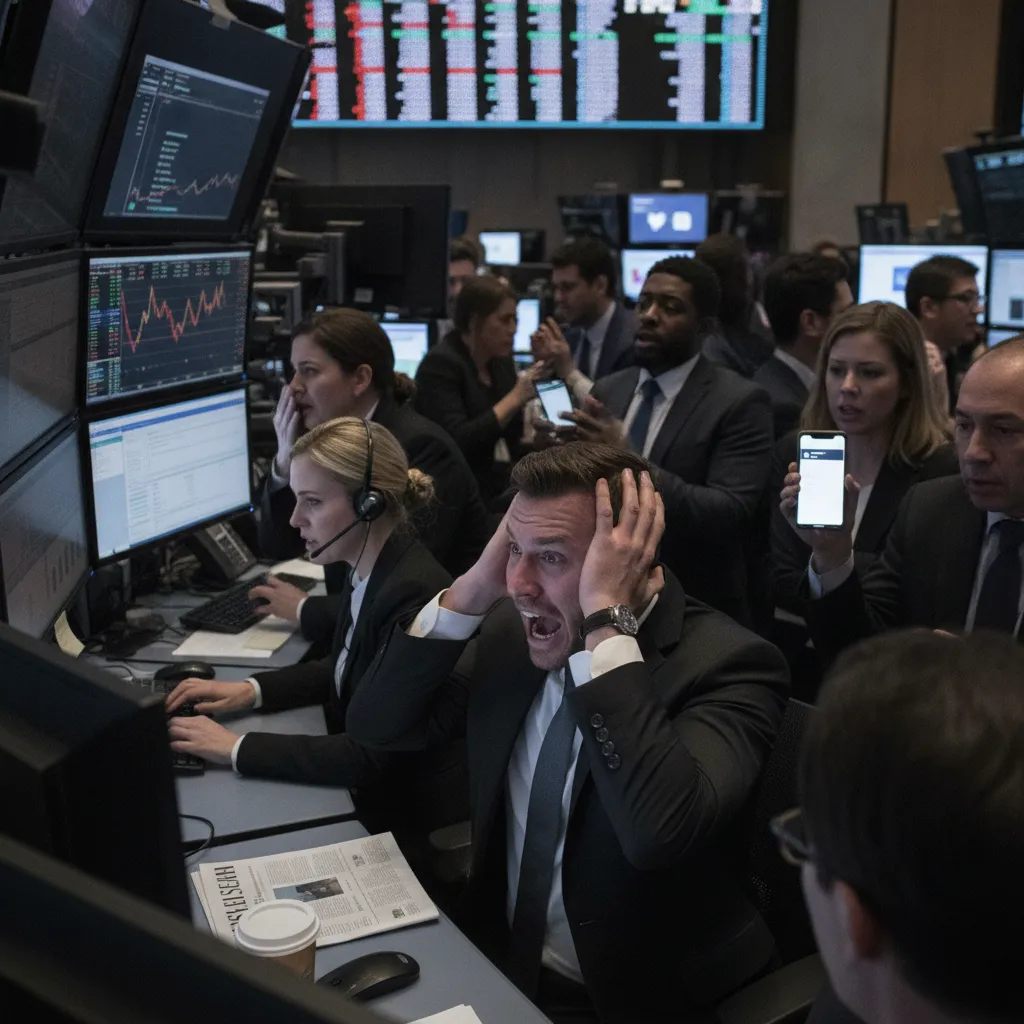
Crypto investors spent several frantic moments wondering why their portfolios were suddenly under threat after OpenAI announced it had proven that ETH is false. On social media platforms like X, users joked that algorithmic traders were slaughtering the market and wondered where Ethereum founder Vitalik Buterin was during the crisis. However, the panic was entirely misplaced because the ETH being discussed has absolutely nothing to do with cryptocurrency or blockchain technology. Instead, OpenAI was referring to the Exponential Time Hypothesis, a complex computer science conjecture from 1999.
The confusion stems from a sixty seven page paper released by OpenAI claiming its AI models found a way to disprove this long standing mathematical assumption. For decades, the Exponential Time Hypothesis served as a roadmap for what computers likely could not do quickly, specifically regarding logic puzzles known as 3 SAT problems. By challenging this boundary, OpenAI suggests that certain tasks in fields ranging from computational biology to geometry might actually be solvable much faster than previously believed. To ensure accuracy, the discovery was formalized using Lean software to mechanically verify every single logical step.
While the announcement sent shockwaves through both the tech and finance worlds, leading mathematicians are urging caution. Experts including Russell Impagliazzo and Ramamohan Paturi are currently reviewing the work but have warned that their involvement is not yet a formal certification of the claim. They emphasize that a breakthrough of this magnitude requires rigorous independent scrutiny before it can be accepted as fact. Furthermore, OpenAI clarified that while this is a theoretical victory, practical applications that improve actual computing speeds remain far off in the distance.
This development has also ignited a competitive race between AI giants, as Anthropic quickly followed up with its own paper authored by its Claude model tackling similar territory. This rapid fire release of high level mathematics highlights a growing trend noted by figures like mathematician Terence Tao, who observed how AI can now flatten complex research problems almost instantly once they enter the public consciousness. As part of this transition toward AI driven discovery, OpenAI has committed five million dollars to help researchers analyze and build upon these machine generated results.

Comments are closed.